
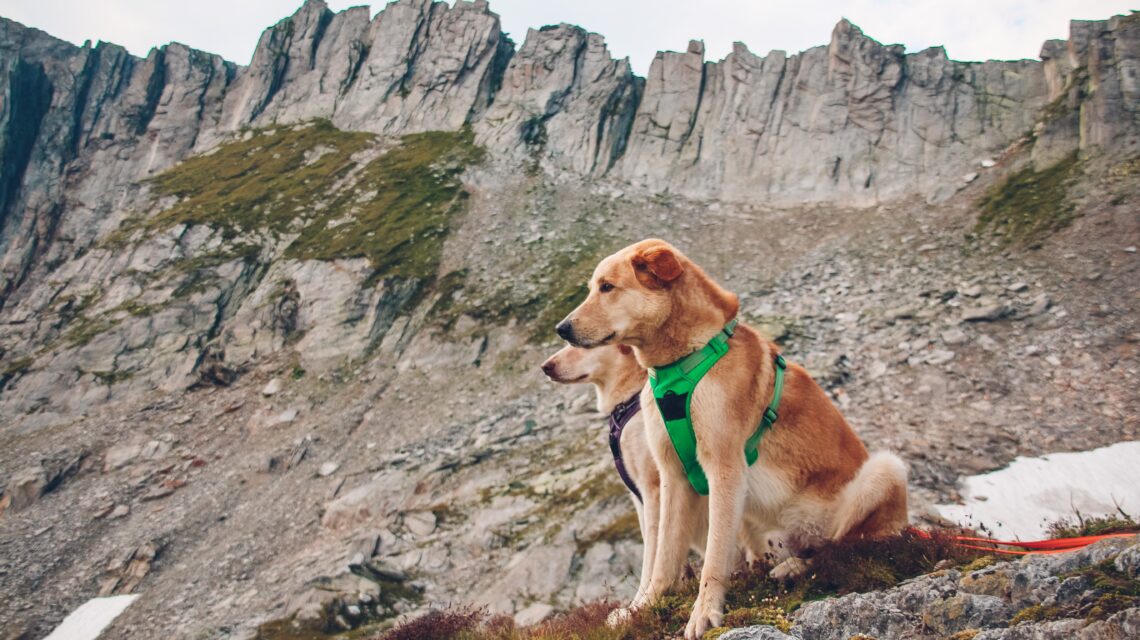
Large dogs put real force on their gear, so a harness has to do more than look sturdy. In this roundup we focused on the details that matter day to day: whether the adjustment range truly covers your dog’s chest, how pressure is spread across the neck and shoulders, how the leash connects, how easily the harness goes on, and whether reflective trim helps on dark walks. We also included two rear-support slings for big dogs whose back legs need help, because mobility gear is a different job than walking gear.
A few picks here are sized for medium or small dogs, and we say so plainly in each section so you don’t order the wrong fit. None of these products is documented as offering crash protection; handles that help a dog into the car are lifting aids, not seat belts. Measure your dog before buying, follow the care label, and bring in your veterinarian or a qualified trainer when fit, pulling, anxiety or mobility concerns go beyond what gear alone can solve.
1. rabbitgoo No Pull Dog Harness, Large

If your Labrador or German Shepherd turns every walk into a tug-of-war and a collar leaves them coughing at the end of the leash, this padded vest is built for that situation. It suits large dogs with a chest girth between 17 and 33.4 inches whose owners want a front clip for training and a back clip for calmer outings.
Pros
- Two metal leash loops give you options: the front clip gently turns a pulling dog back toward you, while the back clip works for relaxed walks or jogs with a dog that already walks politely.
- Padding and breathable mesh spread leash pressure across the chest instead of the throat, which helps keep big dogs comfortable on longer walks.
- Four adjustable straps let you fine-tune the fit across a wide 17 to 33.4 inch chest range, useful for a young dog still filling out.
- Reflective strips add visibility during early-morning and after-dark walks.
- A top handle gives you quick hands-on control if your dog lunges, and it can help steady a dog getting into the car.
- The listed breed guidance (Labrador, German Shepherd, Siberian Husky, Giant Schnauzer) makes it easier to judge whether the Large size is in the right range.
Cons
- It goes on over the head before you snap the two buckles, which some head-shy dogs may resist at first.
- The handle can help with car loading, but nothing in the product information documents crash protection, so it should not be treated as a vehicle restraint on its own.
- Sizing is given only as a chest range, so owners may need to measure the neck carefully as the listing advises; a dog near the edge of the range can fall between Large and X-Large.
Fit is where this harness earns its keep. After slipping it over the head and clipping the two quick-release buckles, work through all four straps until you can slide two fingers under each one and the vest sits snug without shifting toward the shoulders when your dog backs up. The front clip is a training tool rather than a cure for pulling, so pair it with consistent reward-based practice; if pulling comes with lunging or reactivity, a qualified trainer can help build a plan.
For travel, think of the top handle as a lifting aid, not a seat belt. Dogs should ride secured with a restraint or carrier designed for vehicle use, and you should check any car-safety claims against documented testing before relying on them. The listing does not include washing instructions or a weight limit, so look for care directions on the tag and inspect the metal loops, stitching and buckles regularly, replacing the harness if anything frays or cracks.
To buy this product, click here.
2. PHOEPET No Pull Dog Harness, Medium

Three buckles, including a lockable one at the neck, mean this harness never has to go over your dog’s head, a real help for dogs who flinch or back away when gear comes near their face. It fits owners of medium dogs who want a front-clip option, reflective trim and a handle in a high-visibility orange.
Pros
- The neck buckle and two chest buckles let you wrap the harness around your dog rather than pulling it over the head, which can make dressing a nervous dog much calmer.
- A locking mechanism on the neck buckle adds a layer of protection against the buckle popping open accidentally.
- Two metal hook loops give you a chest clip to reduce pulling and a back clip for everyday walking.
- Reflective material helps drivers notice your dog sooner when light is low.
- A soft back handle lets you bring a lunging dog closer and gives you something to hold when helping your dog into the car.
- Oxford nylon fabric in a bright orange color adds daytime visibility on top of the reflective trim.
Cons
- This is a Medium, so most large breeds will need a bigger size; the notes don’t list chest or neck measurements, so you’ll have to check the brand’s size chart before ordering.
- The buckles are POM plastic, so owners of strong pullers may want to inspect them regularly for cracks or wear.
- The handle helps with lifting into a vehicle, but it is not documented as a travel restraint or as offering any crash protection.
The three-buckle layout is the standout, and it matters most for dogs who dislike having anything pulled over their ears. Clip the neck first, then the two chest buckles, and adjust until the harness sits flat without gaping at the shoulders. Because the notes give no measurement range, measure your dog’s neck and the widest part of the ribcage behind the front legs, then compare against the official chart; if your dog falls at the top of Medium, sizing up may be the safer bet.
Use the front ring while teaching loose-leash walking and switch to the back ring once your dog walks calmly. In the car, secure your dog with a restraint or carrier built for vehicle travel rather than relying on the handle. No washing directions are included here, so check the care tag before cleaning. The listing mentions a refund or replacement for quality problems, but confirm the current terms with the seller before buying.
To buy this product, click here.
3. PICK FOR LIFE Dog Lift Harness, Large

This rear-support sling is for owners of large dogs whose back legs are failing them: seniors who struggle to stand, dogs recovering from knee surgery such as CCL (ACL) or TPLO repair, and dogs with hip problems who need a hand on stairs or getting into the car. It’s a handler-assist tool, not an everyday walking harness.
Pros
- It lifts and steadies the hindquarters, helping a weak dog rise from lying down and manage stairs or car entry.
- A synthetic fleece lining sits against the belly to reduce chafing during repeated lifts.
- The outer shell is Oxford fabric, chosen for durability when supporting a large dog’s weight.
- Padded handles cushion your hands while you share the load with your dog.
- It’s washable and folds into a drawstring bag, so it’s easy to keep clean and bring along on trips or vet visits.
Cons
- It supports only the rear end, so dogs with front-leg weakness or whole-body instability may need a full-body lift harness instead.
- There’s no leash attachment described, so you’ll still need a separate collar or harness for walking control.
- The notes give no measurements or weight capacity, so buyers should confirm the sizing and load guidance before relying on it for a heavy dog.
Before using any lift aid after surgery or for a new mobility problem, check with your veterinarian or a rehabilitation professional about when and how much assistance is appropriate. Slide the sling under the belly just ahead of the hind legs, center it so the fleece lies flat, and lift gently with both padded handles, letting your dog keep bearing whatever weight they comfortably can. Lift with your legs rather than your back, especially with a heavy dog.
For getting in and out of a vehicle, the sling helps you guide the hind end up, but it doesn’t secure your dog once inside; use a restraint or carrier designed for car travel for the drive itself. Wash it per the care label, since the listing only says it’s washable, and check stitching at the handles before each use. If your dog seems painful, resists being lifted or isn’t improving, schedule a recheck with your veterinarian.
To buy this product, click here.
4. rabbitgoo No Pull Dog Harness, Medium

Compared with a flat collar, which concentrates leash pressure on the throat, this padded vest spreads the force across the chest and adds a front clip for pulling. It’s sized for medium dogs, with a chest range of 15 to 27.8 inches, such as Border Collies, Shiba Inus, Bulldogs and Standard Schnauzers, and for owners of larger dogs who need to measure carefully before choosing it.
Pros
- Pressure is spread across padded fabric and breathable mesh rather than the windpipe, a meaningful comfort upgrade for dogs that pull.
- The front metal clip gently redirects a pulling dog, while the back clip suits relaxed walks and jogs.
- Four adjustable straps cover a 15 to 27.8 inch chest range, leaving room for a growing dog.
- Reflective strips improve visibility for walks before sunrise or after dark.
- A top handle lets you quickly hold a dog close if they lunge.
Cons
- As a Medium, it won’t fit most large breeds; owners shopping for big dogs will likely need the Large or X-Large version.
- It slips over the head, which some dogs may find unpleasant until they’ve had practice with treats.
- The handle can steady a dog during car loading, but it has no documented crash protection and shouldn’t replace a proper vehicle restraint.
Measure the neck and the deepest part of the chest before ordering, as the listing recommends. A deep-chested dog near 27.8 inches may be better served by the Large, whose range starts at 17 inches and runs higher. Once it’s on, adjust all four straps so the chest panel sits centered and you can fit two fingers under each strap; recheck after a few minutes of walking, since straps can loosen as the dog moves.
For travel, secure your dog with a restraint or carrier made for vehicles, and look for documented testing if crash protection matters to you. Care instructions aren’t included in these notes, so follow the tag when washing and replace the harness if you see fraying near the clips. If pulling persists despite the front clip, or comes with reactivity toward people or other dogs, a qualified trainer is worth the investment.
To buy this product, click here.
5. matilor Step-in Dog Harness, Medium

When your dog has a small frame, with a 13.5 to 16.5 inch chest and a weight of 10 to 15 pounds, a bulky vest can swamp them, and this lightweight air-mesh step-in harness keeps things trim. It’s meant for small-to-medium dogs, not large breeds, so it belongs on this list only for households with a smaller dog alongside a big one.
Pros
- Air mesh is light, breathable and quick-drying, which suits small dogs on warm days.
- The step-in design takes about three steps to put on and remove, with nothing pulled over the head.
- A buckle with a safety lock helps prevent accidental release.
- Two D rings give you more than one connection point.
- It’s machine washable on a cold, gentle cycle, which makes routine cleaning easy.
- A matching leash is included, so you have a complete walking set out of the box.
Cons
- The size range is narrow at 13.5 to 16.5 inches of chest, so a dog near either edge may quickly outgrow it or find it too loose.
- It is not suitable for large dogs; owners of big breeds will need a different harness entirely.
- The notes don’t explain where the D rings sit or describe a front-chest clip, so its ability to reduce pulling isn’t clearly documented.
Measure the chest at its widest point and weigh your dog before ordering, since both must fall within this size’s listed range. Step-in harnesses require the dog to lift each front paw into a loop, which some dogs tolerate easily and others resist; short, treat-based practice sessions help. Once it’s on, make sure the locking buckle has engaged and the harness doesn’t slide backward when your dog pulls away from you.
Follow the care directions exactly: cold water, gentle cycle, no bleach and no tumble drying. The leash length isn’t stated, so check that it suits your walking routine. This harness isn’t described as a car restraint, so during travel keep your dog in a carrier or restraint designed for vehicles. For a small dog that slips out of gear or pulls hard, a qualified trainer can help with fit and handling.
To buy this product, click here.
6. rabbitgoo No Pull Dog Harness, X-Large

Picture the first walk of the day, before sunrise, with a Newfoundland or Golden Retriever eager to drag you toward the corner. That’s the routine this X-Large vest is built for: big, broad-chested dogs measuring 21 to 38 inches around the chest whose owners want padded comfort, a front clip to ease pulling, reflective trim for dark mornings and a handle for quick control.
Pros
- A 21 to 38 inch chest range covers the giant and heavy-bodied breeds the listing names, including Newfoundland, Anatolian Shepherd, Golden Retriever and German Shepherd.
- The front metal clip gently turns a pulling dog back toward you, while the back clip handles easygoing walks and jogs.
- Soft padding and breathable mesh spread leash pressure across the chest rather than the throat, helping keep big dogs comfortable on longer outings.
- Four adjustable straps give you room to fine-tune the fit for a deep chest or a dog that’s still filling out.
- Reflective strips make you both easier to spot on early-morning and late-night walks.
- The top handle lets you steady a dog that lunges and gives you a grip when helping a heavy dog into the car.
Cons
- It goes on over the head, which some large dogs may find awkward or resist until they get used to it.
- Its chest range overlaps heavily with the Large size, so dogs between 21 and 33.4 inches may need careful measuring to decide which fits better.
- The handle can help with car loading, but crash protection isn’t documented, so it shouldn’t stand in for a travel restraint.
With big dogs, a sloppy fit shows up fast: a loose harness shifts toward the shoulders or lets a determined dog back out. Measure both the neck and the widest part of the ribcage, as the listing advises, then adjust all four straps so you can slide two fingers under each one. Walk a few minutes, recheck, and tighten anything that’s loosened. If your dog is near the top of the Large range, compare both sizes before ordering rather than assuming bigger is safer.
The front clip helps manage pulling but works best paired with steady, reward-based training; a qualified trainer can help if your dog lunges or reacts to other dogs. For car rides, secure your dog with a restraint or crate designed for vehicle travel. Washing instructions and a weight rating aren’t included in these notes, so check the care tag and inspect the metal loops, buckles and stitching regularly, replacing the harness at the first sign of fraying.
To buy this product, click here.
7. LOOBANI Dog Sling for Large Dogs

The trade-off is clear upfront: this sling supports only the hind end, and you’ll be walking alongside your dog holding the handle the whole time. For a large senior dog with arthritis or hip dysplasia, or one recovering from ACL or CCL surgery, that hands-on help can still mean the difference between staying home and making it outside for bathroom breaks, stairs and car trips.
Pros
- It helps a dog with weak back legs stand up, climb stairs, get into vehicles and head outside for a bathroom break.
- A thickened design with a soft, sheepskin-like lining cushions the belly during lifts.
- The handle has removable padding to protect your hands while you carry part of the load.
- A reflective nylon band runs the length of the sling, adding structure and some visibility on evening outings.
- Adjustable straps are long enough to suit short dogs paired with tall handlers.
- The sling can be shifted aside easily so it doesn’t get in the way when your dog needs to relieve itself.
- It’s machine washable and folds into a carry bag for storage or trips.
Cons
- It assists only the rear legs, so dogs with front-limb weakness or overall instability may need a full-body support harness.
- No leash attachment is described, so you’ll still need a separate collar or harness for walking control.
- The listing says it can hold any breed but gives no weight capacity or measurements, so buyers should confirm sizing and load guidance before using it on a very heavy dog.
Ask your veterinarian or a rehabilitation professional how much assistance your dog should get, especially after surgery or a new diagnosis. Slide the sling under the belly in front of the hind legs, adjust the strap so you can stand comfortably upright, and lift only enough to steady your dog while letting them bear the weight they can. With a male dog, check that the sling sits clear of the area he urinates from; with any dog, move it aside for bathroom breaks.
The sling helps you lift your dog into a vehicle, but it doesn’t keep them secured during the drive, so use a restraint or carrier designed for car travel. Machine wash it per the care label and let it dry completely before the next use. Inspect the stitching where the handle meets the band before each lift. If your dog shows pain, refuses to bear weight or seems to be getting worse, schedule a recheck with your veterinarian.
To buy this product, click here.
FAQ
How do I choose the right harness size for a large dog?
Start with the chest range the maker lists, not the breed name. For example, the rabbitgoo Large covers a 17 to 33.4 inch chest and the X-Large covers 21 to 38 inches, so many dogs fall within both. If your dog sits where two sizes overlap, look at neck size and body shape: deep-chested or very broad dogs often do better in the larger size with straps tightened. Avoid picking a medium-sized harness for a large breed just because the straps adjust, since panels and buckles may sit in the wrong places.
How should I measure my dog for a harness?
Use a soft tape measure. Wrap it around the widest part of the ribcage, just behind the front legs, for chest girth, and around the base of the neck where a harness collar would sit. Keep the tape snug but not tight, and measure twice. Compare both numbers to the size chart before ordering. Once the harness arrives, adjust it so you can slide about two fingers under each strap, then watch how it sits while your dog walks.
Is a harness better than a collar for walking a large dog that pulls?
For many dogs that pull, a padded harness is more comfortable because it spreads leash pressure across the chest instead of concentrating it on the throat. A front clip, like those on the rabbitgoo and PHOEPET harnesses, can gently turn a pulling dog back toward you. A harness doesn’t replace training, though; keep an ID collar on your dog and work on loose-leash walking with rewards. If pulling comes with lunging or reactivity, a qualified trainer can help.
How can I keep my dog from backing out of a harness?
A good fit is the biggest factor. Tighten all adjustment points so the harness doesn’t slide toward the shoulders when your dog pulls backward, and recheck after a few minutes of walking because straps can loosen. Check that buckles are fully clicked, and use a locking buckle when one is provided. Inspect stitching and hardware regularly. If your dog panics and tries to wriggle free on walks, talk with a trainer about the cause rather than relying on tighter gear alone.
When are reflective harnesses worth it?
Reflective trim helps most on walks near roads around dawn, dusk or after dark, when drivers rely on headlights to spot you. Several harnesses here include reflective strips or trim, and the LOOBANI sling has a reflective band. Remember that reflective material only shines when light hits it, so for very dark routes consider adding a light for yourself or your dog. A bright color, such as the orange PHOEPET, can also help during the day.
How should my dog ride in the car?
Your dog should be secured during every drive with a restraint or carrier designed for vehicle travel, not just a walking harness. Harness handles are useful for helping a big dog climb in, but none of the products here documents crash protection. If you’re choosing a car restraint, look for clear documentation of any testing it has undergone. For dogs that drool, pant or pace during rides, ask your veterinarian or a trainer about motion sickness or travel anxiety.
When should I talk to a vet or trainer about walking gear?
See your veterinarian if a harness causes rubbing or hair loss, if your dog seems sore after walks, or before using a lift sling after surgery or for a new mobility problem. A qualified trainer is the right call for persistent pulling, lunging, reactivity or fear of being handled. Both can also help you confirm fit, especially for large or unusually shaped dogs.
Conclusion
For most large dogs, the rabbitgoo Large and X-Large harnesses offer the most practical mix of size range, padding, two leash clips and reflective trim; measure carefully to choose between them. The PHOEPET harness suits medium dogs who dislike gear going over their heads, the rabbitgoo Medium fits mid-sized dogs that pull, and the matilor step-in harness is meant only for small dogs, which makes it useful in mixed-size households. For big dogs with weak back legs, the PICK FOR LIFE and LOOBANI slings help you share the work of standing, stairs and car loading.
Whatever you pick, measure first, adjust every strap, recheck the fit on walks, and replace worn gear before it fails. Keep your dog properly secured in the car with equipment built for vehicle travel, and lean on your veterinarian or a qualified trainer when fit, behavior or mobility needs go beyond what a harness can handle.